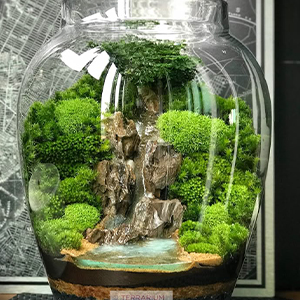
Terrariums are tiny, living ecosystems that you get to create by hand. With the right balance of plants, soil, moisture, and light, a sealed terrarium can sustain itself for years with little to no outside intervention.
The story of the modern terrarium began in the 1800s with the Wardian Case, an enclosed glass container developed by English physician and botanist Nathaniel Bagshaw Ward. What began as an accidental discovery became a revolutionary way to transport living plants across oceans, protecting them from harsh conditions while keeping them hydrated.Wardian Cases were famously used to transport tea plants from China to British-controlled India.
This helped Britain establish large-scale tea cultivation in India and contributed to the growth of the Indian tea industry.During the Victorian Era, Wardian Cases also became fashionable pieces of furniture. Ferns and other plants that were once difficult to grow indoors could be cultivated inside these miniature glasshouses, transforming nature into a living work of art within the home.Today, terrariums have evolved from scientific curiosity and Victorian fashion into a creative way to explore nature on a miniature scale.
With a handful of plants, soil, and a glass vessel, you can create and care for your own little ecosystem—right in the palm of your hand.